China Top Guide to Solid Wood Furniture in High Humidity

Time:2026-09-27 Author:Mason
0%

China Top Guide to Solid Wood Furniture in High Humidity begins with one practical truth: wood responds to moisture. It absorbs water vapor when indoor humidity rises and releases it when conditions become drier. This movement can cause swelling, sticking drawers, raised grain, cracked joints, or cloudy finishes.

The USDA Forest Products Laboratory’s Wood Handbook, FPL-GTR-282, explains that wood is hygroscopic and continually exchanges moisture with surrounding air. At approximately 30% to 50% relative humidity, many interior wood products remain closer to stable moisture conditions. However, tropical coastal cities in China can exceed 80% outdoor humidity during summer. Indoor air-conditioning may reduce that level, but uneven cooling can still affect furniture.

Wood scientist Dr. Alex C. Wiedenhoeft describes wood simply: “Wood is a hygroscopic material.” That short statement guides this entire topic. Furniture is not inert decoration. It is a living, responsive material.

The American Society of Heating, Refrigerating and Air-Conditioning Engineers recommends controlling indoor humidity for comfort and building protection. For solid wood furniture, many manufacturers commonly suggest maintaining indoor relative humidity near 40% to 55%, with stable temperatures and adequate airflow.

This guide explains how to maintain solid wood furniture in high humidity, from placement and ventilation to cleaning, waxing, and moisture monitoring. A small hygrometer beside a cabinet can reveal more than guesswork. A damp cloth left on a tabletop can leave a ring within minutes.

Some advice sounds obvious. It is still ignored. Even careful owners may overuse polish, seal every surface, or place furniture against a wet wall. Those choices deserve reconsideration. Good maintenance is not about stopping wood movement completely. It is about reducing sudden changes and noticing problems early.
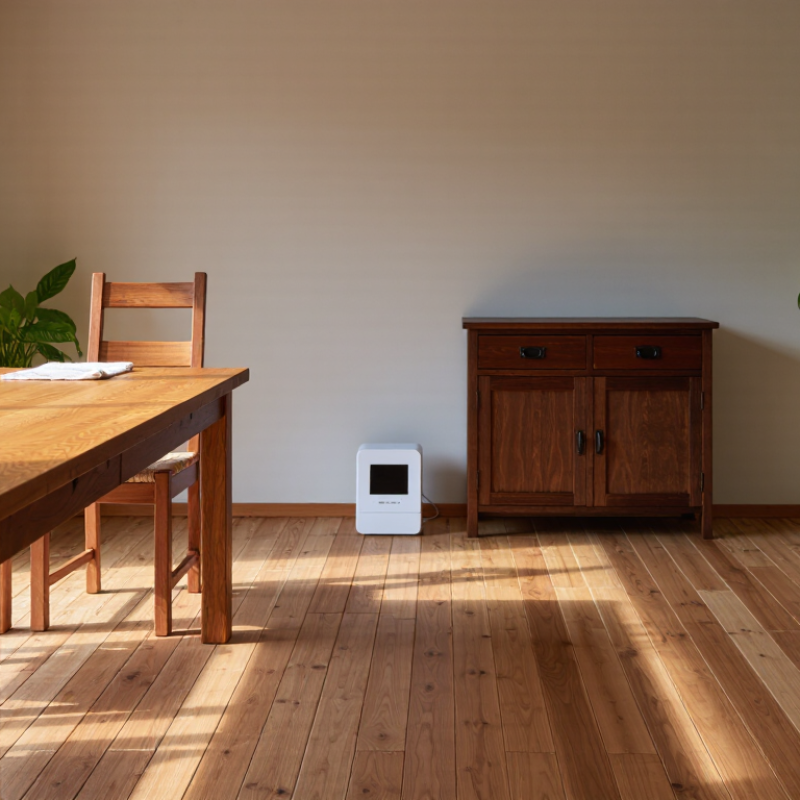
China Top Guide to Solid Wood Furniture in High Humidity

China’s High-Humidity Climate and Its Impact on Solid Wood Furniture

China’s humid climate is not one condition. In southern provinces and along the Yangtze, long wet seasons can keep indoor humidity high, while air-conditioning may create dry spells. The China Meteorological Administration’s 2023 climate bulletin reported national-average relative humidity of about 65%; local conditions vary sharply.

Solid wood responds to moisture, not just temperature. The USDA Forest Products Laboratory’s Wood Handbook (FPL-GTR-282, 2021) places equilibrium moisture content near 16% at 80% relative humidity, compared with about 8% at 40%. That difference can swell drawer fronts, tighten joints, or push a tabletop against nearby fittings. Small changes matter.

Species, grain direction, finish, and construction all influence movement. A coating slows moisture exchange; it does not stop it. Leave room for seasonal expansion, keep furniture away from damp exterior walls, and monitor humidity with a hygrometer. “Solid wood” is not one uniform material—a detail many buying guides overlook. A wide tabletop and a narrow rail may react differently, even in the same room. Acclimation helps, but it cannot eliminate seasonal movement.

Choosing Solid Wood Species for Moisture-Prone Chinese Environments

In humid parts of China, choosing solid wood starts with local conditions, not appearance alone. Teak is valued for its natural oils and relative resistance to moisture, while white oak is often chosen for its hardness and workable structure. Neither is waterproof. Chinese elm can suit traditional interiors, but boards may respond noticeably to seasonal humidity changes. Species names are not guarantees.

Ask how the timber was dried and stored before purchase. Properly kiln-dried wood, acclimated indoors, is less likely to warp than wood installed straight from a damp warehouse. Look closely at joints, drawer fronts, and table edges; small gaps or raised grain can signal movement. A stable species can still crack when a room alternates between humid summers and dry, heated winters. I would not judge durability by a sample alone; construction and finish matter just as much.

Tips: Choose furniture made from well-dried, acclimated boards. Keep it away from wet walls and direct air-conditioning. Wipe spills promptly, and check joints after the first humid season. Wood still moves.

Construction and Finishing Features That Improve Humidity Resistance

China Top Guide to Solid Wood Furniture in High Humidity

Construction and Finishing Features That Improve Humidity Resistance

Solid wood does not stay dimensionally still. The USDA Forest Products Laboratory’s Wood Handbook (FPL-GTR-190, 2010) reports equilibrium moisture content near 16% at 80% relative humidity and room temperature. That figure helps explain why a tight-fitting drawer can swell during a humid season. Kiln-dried stock, properly acclimated before assembly, gives builders a more stable starting point. Details matter.

Construction should allow movement rather than try to eliminate it. Floating door panels, slotted fasteners, and carefully designed joints let boards expand across the grain without splitting. Quarter-sawn boards often move less across their width than flat-sawn boards, though they are not immune. Leave practical clearance around doors and drawers. A few millimeters can matter.

Finishing slows moisture exchange; it does not make furniture waterproof. Apply a consistent coating to exposed faces, backs, edges, and end grain, which can absorb moisture quickly. Seal the underside, too. Uneven coverage may create uneven movement. A cabinet can still shift despite careful finishing, and that is easy to underestimate. Inspect joints and drawer gaps after the first humid season, then adjust if needed.

Installation and Daily Care for Solid Wood Furniture in Damp Conditions

Before installation, let the furniture adjust to the room for several days, especially after delivery from a cooler, drier warehouse. Keep it away from freshly plastered walls and damp floors. A gap of about 5–10 cm behind a cabinet allows air to circulate; tight corners often stay clammy. Use a level on uneven floors, since a rocking table can strain its joints over time. Leave room for seasonal movement, too. Solid wood responds to moisture. A humidity meter is useful; aim for roughly 40–60% relative humidity when practical, and use a dehumidifier if readings remain high. Not every room behaves the same.

For daily care, dust with a soft, dry cloth and wipe spills promptly, especially around table edges and chair joints. Avoid soaking the surface or using steam cleaners; water can enter small cracks and leave swelling or cloudy marks. Use coasters under cold drinks, and keep furniture out of direct sun and strong air-conditioning drafts. A little airflow helps. Inspect the underside of a tabletop now and then, where dampness may go unnoticed. One easy mistake is pushing a cabinet flush against a cold exterior wall. I would check that gap again after a rainy week; the room can feel dry while the wall remains cool and moist.

How to Buy and Evaluate Solid Wood Furniture in China’s Humid Regions

Buying solid wood furniture in China’s humid regions starts with the room, not the showroom. In coastal and southern cities, indoor humidity can rise sharply during the rainy season. Ask the seller how the timber was dried and whether its moisture content suits your home.

A single reading is useful, but it is not proof of long-term stability. No test is perfect. Look underneath. Check the corners.

Inspect joints, drawer edges, and the back of the piece for gaps, swelling, or fresh cracks. Run your hand along the surface; uneven finish can trap moisture or wear quickly. Clarify which parts are solid wood and which use veneer or engineered panels. That distinction matters, especially for tabletops and drawer bottoms.

Ask how the furniture should be acclimated after delivery, and avoid placing it against a damp wall or beside a window that gets strong sun. A small hygrometer can help you track room conditions. It cannot prevent every seasonal movement, though. Wood still responds to its environment, and I would be cautious of anyone promising otherwise. Keep written details about materials, care, and repair terms before paying.

FAQS

Which solid wood species can handle humid conditions better?

Teak has natural oils, while white oak is hard and workable. Neither is waterproof. Chinese elm may shift with seasonal humidity.

Does a wood sample prove the furniture will stay stable?

No. Drying, storage, construction, and finish all matter. I would not trust one small sample alone.

What should I check before buying solid wood furniture?

Ask whether the boards were kiln-dried and acclimated indoors. Inspect drawer fronts, joints, and table edges for gaps or raised grain.

Which construction details help wood move without cracking?

Floating panels, slotted fasteners, and well-designed joints allow seasonal movement. Quarter-sawn boards often move less across their width, but they can still shift.

Can a protective finish make solid wood waterproof?

No. A consistent finish slows moisture exchange. Exposed backs, edges, end grain, and undersides also need coverage.

How should I place furniture in a damp room?

Leave about 5–10 cm behind cabinets for airflow. Keep furniture away from wet walls, damp floors, and strong air-conditioning drafts.

What room humidity is a practical target?

Aim for roughly 40–60% relative humidity when practical. Check with a humidity meter, and consider a dehumidifier if readings stay high.

How can I care for solid wood furniture each day?

Dust with a soft, dry cloth and wipe spills promptly. Use coasters, avoid steam cleaners, and check the underside after rainy weather. Small habits matter.

Conclusion

China’s humid climate can cause solid wood furniture to absorb moisture, swell, warp, or develop surface problems, so choosing suitable materials and construction matters. Compare wood species by their stability and moisture resistance, and look for well-seasoned timber, carefully joined components, and protective finishes that help limit moisture penetration. No wood is completely unaffected by changing humidity, so quality design and appropriate care work together.

To learn how to maintain solid wood furniture in high humidity, keep pieces away from damp walls, direct water, and poorly ventilated corners, while allowing air to circulate around them. Wipe spills promptly and use gentle cleaning methods suited to the finish. Before buying, inspect the furniture for even surfaces, secure joints, consistent finishing, and signs of excess moisture. Consider the room’s ventilation and seasonal conditions when planning delivery and installation, and follow the maker’s care guidance to help preserve the furniture over time.

Mason

Mason

Mason is a seasoned marketing professional with a deep expertise in the company's offerings and a passion for driving brand awareness. With a strong background in digital marketing strategies, he has an innate ability to connect with diverse audiences and effectively communicate product benefits.......