China Top TV Console How to Float Mount on Drywall?

Time:2026-09-07 Author:Liam
0%

A floating TV console can make a room feel wider, cleaner, and easier to maintain. However, drywall is not a structural anchor. The wall must transfer the console’s load safely into studs, blocking, or a properly engineered reinforcement system. This guide explains how to floating mount a tv console on drywall, with practical attention to weight, wall construction, brackets, and cable routing.

The risk deserves careful attention. According to the U.S. Consumer Product Safety Commission’s 2021 report, televisions, furniture, and appliance tip-overs caused an estimated 22,500 emergency-department injuries annually from 2018 through 2020. Children under six represented a significant share of those injuries. A wall-mounted console can reduce floor clutter, but incorrect fixing can create a different hazard. Safety matters. Measure twice.

China’s leading TV console manufacturers increasingly use steel mounting rails, adjustable brackets, and tested load ratings. Still, a product rating does not replace an on-site inspection. Confirm the console’s net weight, maximum equipment load, bracket capacity, and fastener compatibility. Check stud spacing with a stud finder, then verify each location with a small exploratory hole. Drywall thickness, moisture damage, hidden wiring, and plumbing can change the installation plan. Even experienced installers can misjudge one stud. That possibility deserves honest consideration. The following recommendations combine manufacturer installation practices with basic residential construction principles, helping readers select a suitable China-made TV console and mount it more securely. Always follow the supplied instructions and applicable local building requirements.
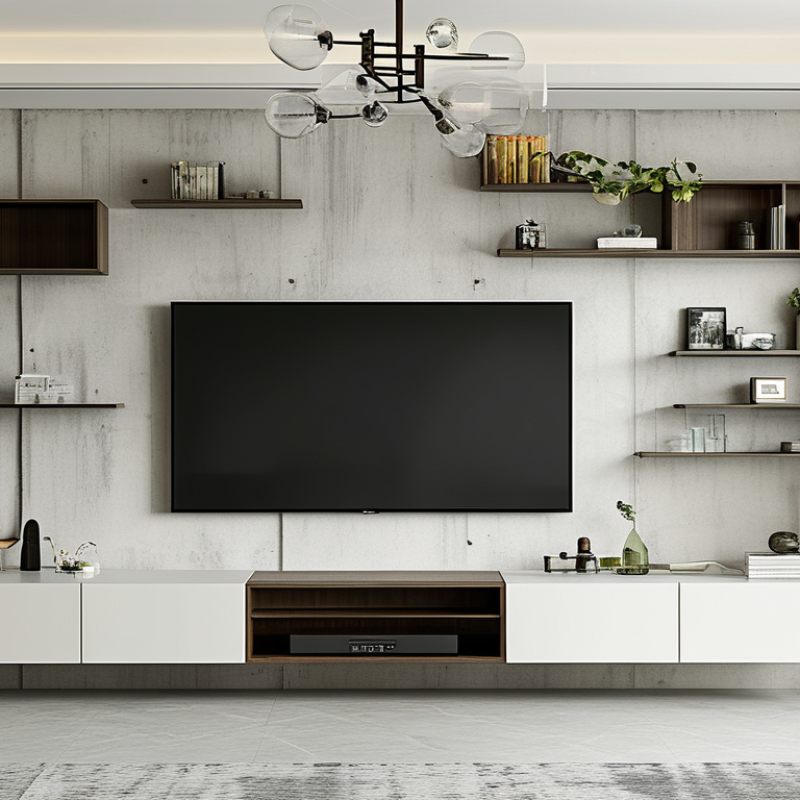
China Top TV Console How to Float Mount on Drywall?

Choosing a China Top TV Console for Drywall Installation

Choosing a China top TV console for drywall installation requires more than attractive finishes. Check the console’s weight, mounting system, and load rating before ordering. A sturdy steel frame and moisture-resistant board can improve long-term reliability. Solid support matters.

Measure the television, wall width, viewing height, and cable locations carefully. Drywall alone cannot safely carry a heavy floating console. Locate the studs with a reliable scanner, then use structural screws that reach them. If stud spacing does not match the mounting holes, add a properly fixed plywood backing panel behind the drywall.

A French cleat can distribute weight more evenly. Leave space for ventilation around game devices and media equipment. Concealed cable channels also keep the installation clean.

In my experience, many failures begin with rushed measurements. I once allowed too little clearance for a power plug. That small mistake changed the final position.

Tips:

Choose a console with adjustable brackets and clear installation instructions. Confirm the wall type before purchase. Ask for tested load data, not vague strength claims. Use a level during every fixing step, and check the cabinet doors after mounting. If the wall feels flexible, stop and reinforce it. A qualified installer can inspect hidden services and verify the anchor points. Drywall is forgiving visually, but not structurally.

Preparing the Wall, Tools, and Mounting Hardware

Preparing the wall correctly matters more than choosing a stylish floating TV console. The U.S. Consumer Product Safety Commission’s 2023 Furniture Tip-Over Report identifies children under six as a particularly vulnerable group. A secure wall connection reduces avoidable movement and impact risks.

Begin by locating every stud with an electronic finder, then confirm each position with a small pilot hole. Standard drywall alone cannot safely support a loaded console. The Gypsum Association’s GA-216 guidance recognizes gypsum panels as a finish surface, not structural framing. Use a level, tape measure, drill, stud finder, pencil, socket driver, and protective eyewear. Measure the television, console width, viewing height, and cable route before drilling. Leave ventilation space around electrical equipment.

Choose mounting hardware according to the console’s loaded weight, not its empty package weight. Include the television, gaming devices, books, and future additions. A structural engineer’s rule is simple: fasteners must transfer force into studs or approved structural blocking. Where studs do not align, install blocking before closing the wall. Heavy-duty hollow-wall anchors may help with light accessories, but they are not a substitute for structural support.

I once trusted a wall scan without confirming it. That was careless. Scan twice. Check for pipes and wiring, tighten bolts evenly, and test the console gradually. It should remain level, quiet, and firmly attached without visible drywall crushing.

China Top TV Console: Drywall Floating-Mount Reference

This chart shows common residential drywall and wall-framing dimensions relevant to floating TV console installation. Standard drywall sheets are commonly 12.7 mm or 15.9 mm thick, while wood studs are often spaced 406 mm or 610 mm on center. Always locate the actual studs, confirm the wall structure, and select mounting hardware according to the console and load requirements.

Locating Studs and Planning the Floating Console Position

Locating studs is the first practical step when planning a floating TV console on drywall. In most wood-framed homes, wall studs are spaced 16 inches on center, although 24-inch spacing also appears in some construction. The APA Engineered Wood Association identifies both layouts in its residential wall guidance. Do not guess.

Use a stud finder, then confirm each result with a small probe near the baseboard or an existing outlet. Measure from a corner and mark the stud centers with painter’s tape. The 2024 International Residential Code also treats framing connections as structural points, so drywall anchors alone should not carry a loaded console. They may support light trim, not a cabinet filled with equipment.

Plan the console position before drilling. Keep the top aligned with the screen’s viewing height, while leaving enough clearance for ventilation and cable bends. A laser level helps reveal a sloping floor or uneven wall. Check for electrical outlets, plumbing routes, and wall switches before selecting the bracket height. One common mistake is centering the cabinet visually, then discovering that only one stud matches the bracket. A wider mounting rail can bridge two studs and distribute the load more safely. Recheck every measurement. Small errors become obvious in a floating installation.

Installing the Support Bracket and Securing the Console

China Top TV Console: How to Float Mount on Drywall?

Installing the Support Bracket and Securing the Console

Before drilling, inspect the console, bracket, and wall carefully. Check the console’s weight and compare it with the bracket’s rated capacity. Drywall alone is not a dependable structural surface for a heavy floating console. Locate at least two wall studs with a stud finder, then mark their centers with a pencil. Measure twice. It saves repairs.

Hold the support bracket against the wall and align it with the stud marks. Use a level across the top edge, because a small tilt becomes obvious after installation. Drill pilot holes through the bracket and into the studs. Install the recommended structural screws, tightening them firmly without crushing the drywall. If the bracket cannot reach enough studs, add solid blocking behind the drywall or seek professional advice. Ordinary plastic anchors may fail under a loaded console.

Lift the console with another person and hook it onto the secured bracket. Do not force the connection. Confirm that every locking screw engages correctly, then test the cabinet with gentle downward pressure. I once rushed this step and found a slight movement that was easy to miss. It needed adjustment. Keep cables loose enough to avoid pulling the console sideways. Place only approved equipment inside, distribute its weight evenly, and recheck the fasteners after several days. Walls can settle, and imperfect alignment sometimes appears later.

Checking Stability, Level, Cable Access, and Load Safety

A China top TV console can look clean when it floats above the floor. Drywall alone, however, should not carry its full weight. Locate two wall studs with a stud finder, then confirm their positions with a small pilot hole. Fasten the mounting rail into the studs using hardware rated for the console’s loaded weight.

Check stability before placing equipment inside. The cabinet should sit firmly against the wall without rocking, twisting, or pulling away at the top. Use a spirit level across the front edge and side panel. Small errors become obvious when a television is installed. I once trusted a level reading from an uneven floor and had to reset the cabinet. That mistake was avoidable.

Leave enough space for power cords, signal cables, and ventilation. Measure connector depth before fixing the console permanently. A tight cable bend can damage plugs or pull against the wall. Feed cables through a prepared opening, and keep electrical connections accessible for inspection. Do not hide overloaded power strips inside the cabinet. Check the manufacturer’s weight limit, then add the television, consoles, speakers, and stored items together. If the total approaches the limit, reduce the load or add proper structural support behind the drywall. Test gently by pressing near both upper corners. It should remain level and quiet. No movement is a good sign.

FAQS

: Can drywall alone support a loaded floating TV console?

: No. Drywall is a finish surface, not structural framing. Fasteners should enter wall studs or approved blocking.

How can I locate wall studs accurately?

Scan with a stud finder, then confirm each mark using a small pilot hole. Do not guess.

What tools should I prepare?

Use a level, tape measure, drill, stud finder, pencil, socket driver, and protective eyewear.

How should I choose the mounting hardware?

Match the hardware to the fully loaded weight. Include the television, devices, books, and future additions.

What if the bracket does not align with two studs?

Install solid blocking behind the drywall before closing the wall. A wider rail may also bridge two studs.

How do I position the console before drilling?

Measure screen height, console width, cable paths, outlets, switches, and ventilation space. Check the wall and floor for unevenness.

How can I secure the bracket safely?

Level the bracket, drill pilot holes into the studs, and tighten structural screws evenly. Avoid crushing the drywall.

How should I test the installed console?

Lift it with another person and engage every locking screw. Apply gentle downward pressure and watch for movement.

What mistakes should I avoid after installation?

Do not pull cables tightly or overload one area. Recheck fasteners after several days because walls may settle.

What should I do if the console moves slightly?

Stop using it and inspect the bracket, screws, and wall. I once rushed this check. It needed adjustment.

Conclusion

Installing a floating TV console on drywall requires careful planning, suitable hardware, and attention to wall structure. Begin by selecting a console with a strong frame, appropriate dimensions, and a weight capacity that matches your television and stored equipment. Prepare the wall by gathering a level, drill, measuring tape, stud finder, screws, anchors, and a suitable support bracket. Before drilling, decide the ideal height and position while allowing enough space for viewing, ventilation, and cable access.

The key to learning how to floating mount a tv console on drywall is securing the bracket to wall studs whenever possible. Mark the stud locations, align the bracket, and confirm that it is level before fastening it firmly. If studs do not provide enough support, use high-quality drywall anchors rated for the total load. Attach the console according to its instructions, then check for movement, unevenness, cable clearance, and proper weight distribution. Do not place equipment inside until the installation feels stable and secure.

Liam

Liam

Liam is a dedicated marketing professional with a profound expertise in the industry, where he excels at highlighting the unique advantages of our core products. With a keen understanding of market trends and consumer needs, Liam frequently updates our company’s professional blog, providing......