A dining room is not only a place for eating. It is where conversations slow down, plates gather, and faces remain visible across the table. That is why many lighting professionals recommend warm white light, usually between 2700K and 3000K, for residential dining spaces. The Illuminating Engineering Society explains that color temperature strongly influences visual atmosphere, although it does not work alone. Brightness, glare, color rendering, and fixture placement also affect comfort.
So, what type of lighting is best for a dining room? In most homes, a dimmable warm LED pendant or chandelier offers the most balanced solution. ENERGY STAR reports that certified LED bulbs use at least 75% less energy and last up to 25 times longer than incandescent bulbs. That efficiency matters when a dining fixture operates every evening. Yet energy savings should not become the only goal. A 2700K lamp with poor color rendering can make roasted vegetables look dull and skin tones appear gray. Look for a high CRI rating, preferably 90 or above, when meals and conversation matter.
Professional lighting guidance also warns against excessive glare. A bare bulb above eye level can create sharp reflections on wine glasses, polished plates, and dark tabletops. A shaded pendant, positioned above the table, usually feels calmer. I have found that 3000K can suit modern interiors, but it may feel slightly clinical in rooms with cool gray finishes. Personal taste still matters. Warm lighting is not automatically perfect; it needs dimming, accurate color, and careful control.
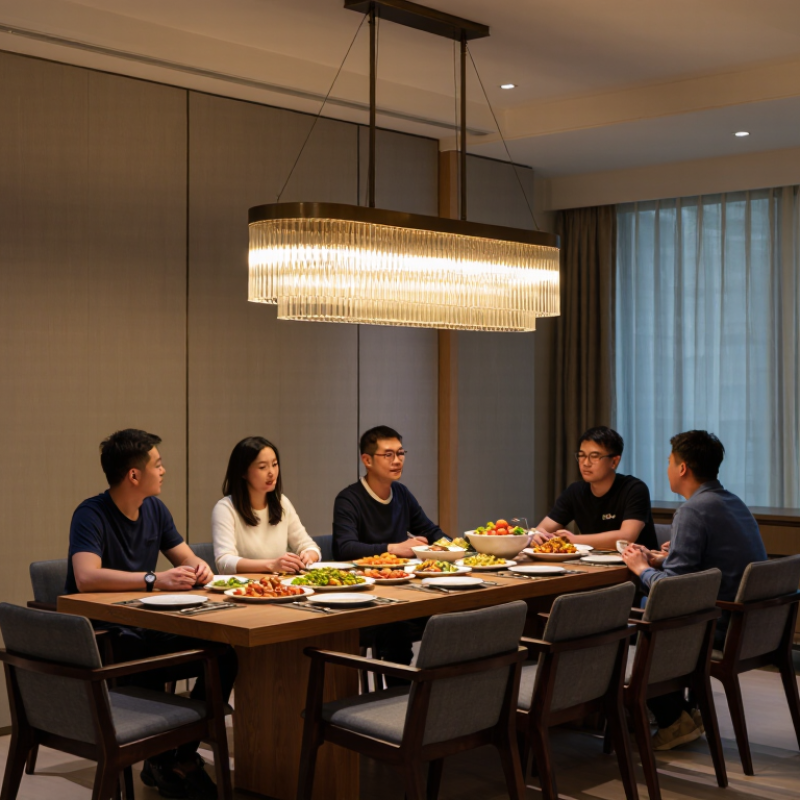
Define Warm Lighting: 2700–3000 K in Professional CCT Practice
Why Is Warm Lighting Best for a Dining Room?
In professional CCT practice, warm lighting usually means 2700–3000 K. CCT, or correlated color temperature, describes the apparent color of white light. It does not measure brightness or energy use. The CIE 015:2018 technical report explains that CCT is calculated from chromaticity, so two lamps with the same rating may still look slightly different. This matters above a wooden dining table.
The IES Lighting Handbook identifies 2700 K and 3000 K as common warm-white choices for residential and hospitality spaces. At 2700 K, cream walls can appear richer, skin tones look gentler, and roasted food gains a warmer visual character. At 3000 K, plates usually look cleaner, while the room still avoids a cold, bluish feeling. Subtle, but noticeable.
Keep the light comfortable.
The U.S. Department of Energy’s Solid-State Lighting reports show that modern LED systems can deliver high efficacy across multiple CCT ranges. Therefore, choosing 2700 K does not automatically mean wasting more electricity. Beam angle, dimming quality, glare, and color rendering often matter more. I usually specify a high color-rendering source, especially for colorful dishes, but this is not a perfect rule. Excessively warm light can make green vegetables look dull. A reflective ceiling can also amplify glare. Test the fixture above the actual table, with real plates and wall colors, before final selection.
Why Is Warm Lighting Best for a Dining Room?
Warm lighting is typically defined as 2700–3000 K in professional correlated color temperature (CCT) practice.
Warm CCT creates a softer, more intimate visual atmosphere than neutral or cool white light. The 2700–3000 K range is commonly used in dining areas because it complements wood, food, and warm-colored surfaces while reducing the visually stark effect associated with higher CCT values.
Reference values represent typical correlated color temperatures for common light sources; actual products may vary.
Assess Color Quality: ENERGY STAR Sets CRI at 80 or Higher
Why Is Warm Lighting Best for a Dining Room?
Warm lighting creates a relaxed dining room, but color quality matters just as much. A soft glow can make wood, food, and skin tones feel inviting. However, low-quality light may make vegetables look gray or meat appear dull. I noticed this during a dinner setup: the room felt cozy, yet the table colors looked strangely flat.
Color Rendering Index, or CRI, measures how accurately a light source shows colors. The ENERGY STAR requirement sets CRI at 80 or higher for suitable light quality. Higher CRI lighting usually reveals richer reds, natural greens, and clearer neutral tones. CRI does not measure warmth, though. Color temperature controls whether light appears golden or cool. A warm lamp with poor CRI can still distort the meal’s appearance. That distinction is easy to miss.
Tips
Choose warm light around 2700K to 3000K, then check the CRI rating. Look for CRI 80 or higher. If possible, test one lamp over the table before replacing every fixture. Compare a white plate, fresh herbs, and wooden surfaces under the light. Trust your eyes, but remember that evening surroundings can affect judgment. My own preference changed after testing bulbs at different times. A slightly brighter option sometimes feels more comfortable than the softest one.
Balance Ambience and Efficiency: LEDs Use 75% Less Energy (DOE)
Warm lighting suits a dining room because it softens faces, wood grain, and evening shadows. In my experience, bulbs near 2700K to 3000K create a relaxed setting without making food look dull. A dimmer adds control when dinner becomes conversation, though compatibility must be checked before installation. LEDs also reduce operating demand. The U.S. Department of Energy reports that residential LEDs use at least 75% less energy than incandescent lighting and can last much longer. That difference matters above a table used every night. Lower wattage can mean less heat, too. Small detail, real comfort. Yet “efficient” does not automatically mean perfect. Poorly aimed fixtures still waste light, and excessive brightness can spoil the room’s calm.
Choose light with a high color-rendering rating, ideally 90 or higher, when accurate food colors matter. Keep the fixture centered over the table, and shield bare lamps from direct eye contact. I have found that one warm pendant often feels inviting, while several mismatched color temperatures feel accidental. This is where planning beats decoration. Estimate daily use, compare wattage, and select a suitable dimming system. Savings vary with electricity rates, operating hours, and the lamps being replaced, so the 75% figure is a useful benchmark, not a guarantee. I still reconsider my own setups after installation. Not always. A room can look beautiful in photographs yet feel dim during dessert. Test the light at night.
Why Is Warm Lighting Best for a Dining Room? - Balance Ambience and Efficiency: LEDs Use 75% Less Energy (DOE)
| Lighting Dimension |
Warm LED Lighting |
Typical Incandescent Lighting |
Dining-Room Benefit |
| Color temperature |
2,700–3,000 K |
About 2,700 K |
Creates a welcoming, relaxed atmosphere and complements wood, textiles, and warm finishes. |
| Color rendering |
Choose CRI 90 or higher when accurate food and décor colors matter. |
Generally produces warm color quality naturally. |
Helps meals, table settings, and skin tones appear more natural. |
| Equivalent light output |
A 15 W LED is used here as an illustrative replacement for a 60 W incandescent lamp. |
60 W reference lamp |
The actual replacement should be selected by lumens, not wattage alone. |
| Energy use |
15 W |
60 W |
The illustrative LED setup uses 75% less electricity than the 60 W reference lamp. |
| Annual electricity use |
16.4 kWh per year |
65.7 kWh per year |
Based on 3 hours per day for 365 days; estimated savings are 49.3 kWh per year. |
| Estimated annual electricity cost |
About $2.62 per year |
About $10.51 per year |
Illustrative calculation at $0.16 per kWh; local electricity rates vary. |
| Rated operating life |
Often about 25,000 hours for a quality residential LED lamp. |
About 1,000 hours for a typical incandescent lamp. |
Fewer replacements and less maintenance, especially in hard-to-reach fixtures. |
| Heat generation |
Lower heat output for the same general lighting task. |
Higher heat output because much of the input energy becomes heat. |
Improves comfort around pendant fixtures and reduces unnecessary heat near the table. |
| Dimming and control |
Use a dimmable LED with a compatible dimmer. |
Usually dims smoothly with a conventional compatible dimmer. |
Lower light levels can support intimate dinners, while brighter settings help with cleaning and serving. |
Calculation note: Annual energy figures assume one lamp operating for 3 hours per day over 365 days. The U.S. Department of Energy states that residential LEDs generally use at least 75% less energy and last up to 25 times longer than incandescent lighting; product performance varies by lamp and fixture.
Control Glare and Layers with IES-Based Ambient and Accent Design
Warm lighting often suits a dining room because it softens faces, wood surfaces, and evening shadows. A color temperature near 2700K to 3000K usually feels comfortable without making food appear dull. However, warmth alone does not prevent glare. A poorly aimed pendant can still create harsh reflections on plates, glass, and polished tables.
An IES-based plan uses measured photometric data to predict how each fixture distributes light. Ambient lighting should spread evenly across walls and circulation areas. Accent lighting can then highlight artwork, shelving, or architectural details. Keep accent beams away from diners’ eyes. Aim them across surfaces, not directly toward seats. Dimming also matters, since a bright room can feel uncomfortable after sunset.
Layering works best when the light levels remain visually balanced. For example, gentle ceiling illumination can support movement, while focused wall or table accents add depth. Use shielding, wider beam angles, and careful mounting heights to control glare. I have found that digital calculations are useful, but they are not perfect. Furniture, finishes, and changing daylight can alter the result. Test the room at dinner height, with real glassware on the table. Then adjust the angles or dimming levels. Small corrections often matter more than a dramatic fixture.
Conclusion
Warm lighting is often considered the best choice for a dining room because it creates a comfortable, welcoming atmosphere while supporting everyday dining activities. In professional correlated color temperature practice, warm light typically falls between 2700 and 3000 K, producing a soft tone that enhances the room’s sense of intimacy. For accurate and natural-looking food and furnishings, choose light sources with a color rendering index of 80 or higher, consistent with common energy-efficiency guidance.
The right brightness should be matched to dining tasks, such as eating, serving, cleaning, or reading, by following recommended illuminance principles. A layered plan can combine gentle ambient lighting with focused accent or task lighting, while careful fixture placement and diffusion help reduce glare. Efficient LED lighting can also use approximately 75% less energy than traditional incandescent sources. Together, these factors explain why what type of lighting is best for a dining room depends on balancing warmth, visual comfort, function, and efficiency.
